Architecture
This document describes the architectural patterns and data flows shared across all Ilexum Group forensic tools.
Shared Design Principles
All three tools follow consistent architectural patterns:
- Dependency Injection: Components receive their dependencies through constructors
- Interface Abstraction: Platform-specific implementations behind clean interfaces
- Command Logging: All OS operations logged to custody chain
- RFC 5424 Compliance: Structured logging in syslog format
Component Architecture
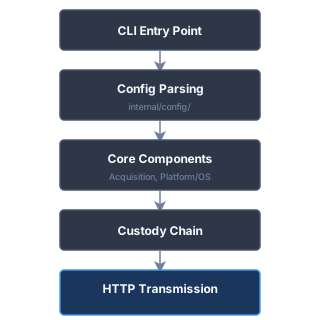
Common Layers
Custody Chain Model
The custody chain is the backbone of evidence integrity:
type CustodyChainEntry struct {
    ID               string           // UUID v4
    AgentType        string           // "bitex", "tracium", "evidex"
    AgentVersion     string
    AgentHostname    string
    AgentUser        string
    StartTimestamp   time.Time
    EndTimestamp     time.Time
    Duration         string
    MD5Hash          string
    SHA1Hash          string
    SHA256Hash        string
    TotalSizeBytes   int64
    ItemCount        int
    LogEntries       []LogEntry       // Command execution log
    CommandHistory   []CommandExecution
}
Evidence Integrity
The custody chain calculates MD5, SHA1, and SHA256 hashes over all collected evidence. Any tampering with the evidence would result in hash mismatches detectable during verification.
Data Flow
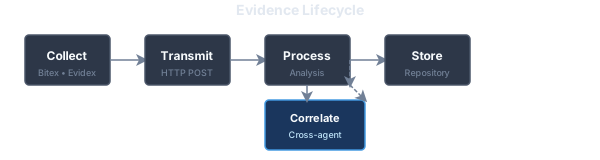
Evidence Collection Flow
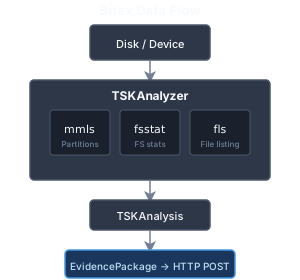
Bitex Data Flow
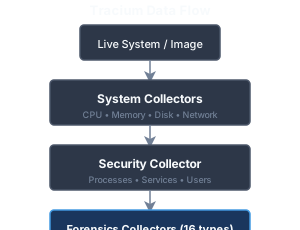
Tracium Data Flow
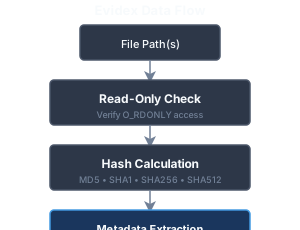
Evidex Data Flow
HTTP Transmission
All tools use the same transmission pattern:
type Sender struct {
    serverURL string
    authToken string
    httpClient *http.Client
}

func (s *Sender) SendEvidencePackage(pkg *EvidencePackage) error {
    jsonData, err := json.Marshal(pkg)
    if err != nil {
        return err
    }

    req, err := http.NewRequest("POST", s.serverURL, bytes.NewBuffer(jsonData))
    if err != nil {
        return err
    }

    req.Header.Set("Authorization", "Bearer "+s.authToken)
    req.Header.Set("Content-Type", "application/json")

    resp, err := s.httpClient.Do(req)
    // ...
}
Security
Always use HTTPS in production environments. The Bearer token is transmitted in plain text over HTTP.
Platform Abstraction
Tools use Go build tags for platform-specific implementations:
internal/os/
├── os.go           # Interface definition
├── default.go      # Default implementation
├── windows.go      # Windows-specific (GOOS=windows)
├── linux.go        # Linux-specific (GOOS=linux)
├── darwin.go       # macOS-specific (GOOS=darwin)
└── bsd.go          # BSD-specific (GOOS=freebsd, openbsd)
Evidence Lifecycle